
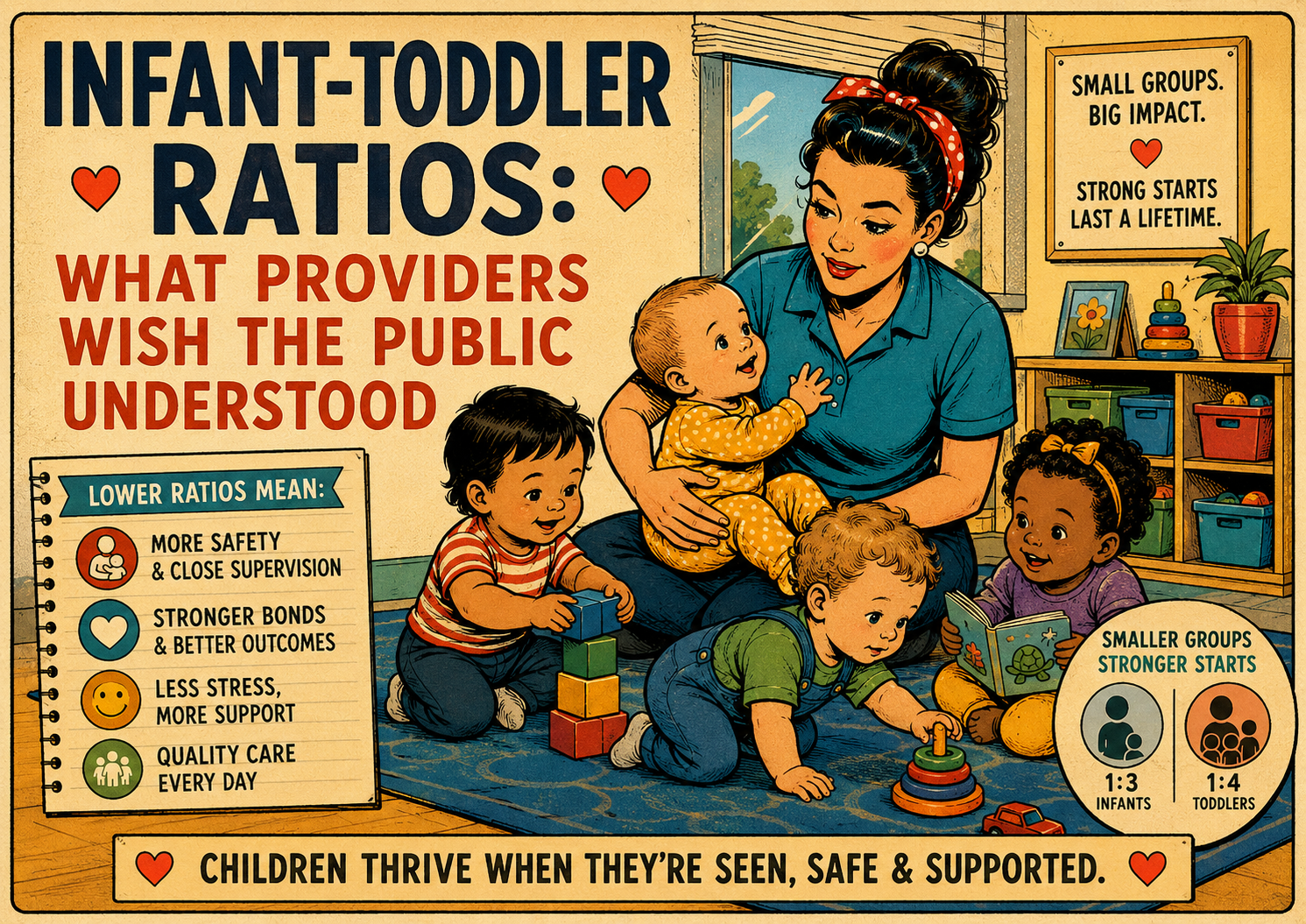
California childcare ratios for infants and toddlers are one of those policy details that look boring on paper and matter enormously in practice. Most parents don’t think about them until they walk into an infant room and notice the air feels different — calmer, more attentive, more present.
What providers wish the public understood about infant-toddler ratios
The ratio is the room. Whether one caregiver is responsible for three babies or four babies changes everything about how the day feels. With three, the caregiver can attend to each child’s signals, follow their pace, and build the kind of responsive relationship that infants need to thrive. With four, she’s mostly keeping everyone alive, fed, and clean. Both are ‘within ratio.’ Only one is what infant care is supposed to be.
Infants need predictable adults. A baby’s brain is wiring itself based on who responds to her cries, how quickly, how warmly, and how consistently. The teacher-to-child ratio is the structural floor under this. Tight ratios produce attentive caregivers. Stretched ratios produce overwhelmed ones.
Toddler ratios are about safety and language. A toddler room is more mobile and more verbal than an infant room. A teacher with too many toddlers cannot do safe supervision, language-rich interaction, and toilet learning support simultaneously. Something gets dropped. It’s usually language.
The cost is real. Infant-toddler ratios are tight because the developmental work is intense. That tightness drives the cost per slot — which is why infant care is the most expensive form of childcare. Lower ratios = higher labor cost per child. There’s no way around it.
Subsidies often don’t reflect this cost. California’s subsidyreimbursement rates for infant care often don’t fully cover what tight ratios actually cost to deliver. The gap is absorbed by providers, by families, and ultimately by underpaid infant teachers.
Programs that operate below the legal maximum are doing real work. When a center says ‘we staff at 3:1 even though state allows 4:1,’ they’re investing in the experience for the babies and the sustainability of the teachers. They deserve recognition for that choice, not just compliance credit.
Compliance ratios are a floor, not a goal. The lowest possible ratio that meets the law is not the same as the ratio that produces a great room. Don’t mistake one for the other.
The teachers are the policy. A ratio is only as good as the teacher carrying it. Tight ratios with experienced, well-paid, well-supported teachers produce magic. Tight ratios with new teachers, no breaks, and no planning time produce burnout. Ratios alone aren’t enough.
What providers wish for: subsidy reimbursement that reflects the real cost of low ratios. Funding for centers that operate below maximums. Workforce investment in infant-toddler specialization. Family education so that parents understand what they’re looking at when they tour.
And what we’d say to parents: when you find a great infant-toddler room, with steady teachers and a calm pace and adults who clearly know your child — treasure it. The math behind that room is harder than it looks.